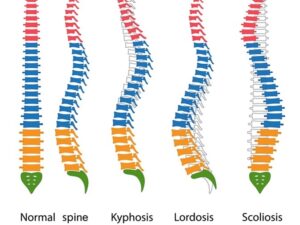





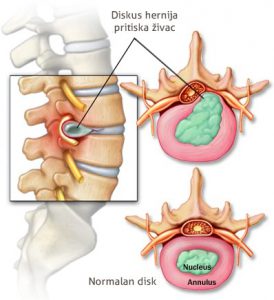
 Our spine is composed of vertebrae, between which there are special parts resembling tiles with a gelatinous structure. These are discs, whose role is to protect the spinal column from external influences, which could cause damage.
However, they wear out, damage over the years, and can slip out of their socket into the intervertebral foramina. They then put pressure on the surrounding nerves, causing pain, and this condition is known as disc herniation.
It most often occurs between the ages of 35 and 45, and obese people are more exposed to it, considering that their discs are much heavier. Also, those who do hard physical work get it easier.
Causes
Disc herniation occurs in most cases as a consequence of various degenerative changes in the spine, and much less often it occurs due to some serious injuries. In the second case, it is often associated with vertebral dislocation or complex fractures. By straining and lifting a heavier load, when the spine is bent, we almost always damage the disc, and often the fibrinous ring breaks. Then a fine mesh splits in it and water is lost inside the soft sail. In this case, the resistance of the disk to any load is reduced.
Symptoms
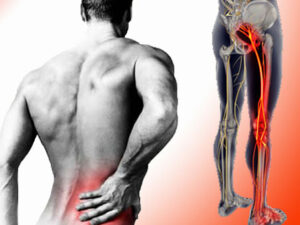
There are cervical and thoracic disc herniation, disc prolapse in 90% of cases occurs in the lower back due to injury or improper lifting of the load. In that case, there is a sharp pain in the lumbar part, which spreads along one leg, all the way to the feet, although dull pain can also occur, the intensity of which slowly increases. The pain is stronger at night, after a longer standing or sitting, but also a longer walk, and it also intensifies when sneezing, coughing or laughing. With increased physical activity, their intensity also increases, while resting and lying down in most cases helps.
Lumbar disc herniation is less often manifested by pain in the feet accompanied by weakness, so that walking on the toes or heels is difficult. In the most severe forms, it is impossible to control urination, even stools, potency and falling of both feet.
Treatment
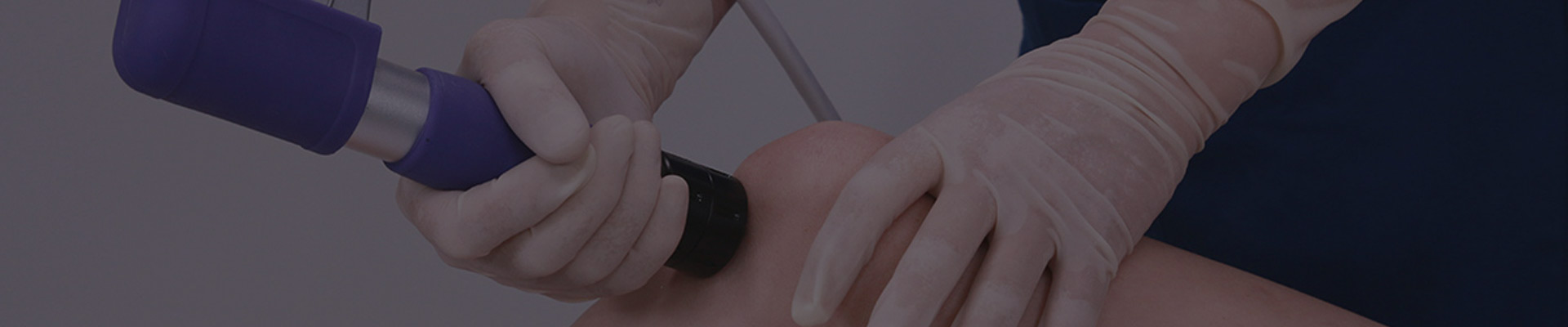
Previous physical therapy in the treatment of DH included electrotherapy procedures (galvanic, diadynamic, interference currents, ultrasound massage, laser therapy) and magnetotherapy with magnetic induction solenoid up to 10 mT, but from our experience so far we achieve much better and faster results by using TALENT electromagnet. penetration field 10-15 cm in tissue depth and magnetic induction 2.5 T.
This type of therapy very quickly achieves an analgesic effect (soothes pain, stimulates the conduction of the compressed nerve, ie unpleasant sensations in the form of pain, tingling, and tingling along the leg are lost, so that the patient is much more comfortable to perform kinesitherapy treatment in the form of exercises for DH which are an indispensable part of the treatment of this problem.
For more information and your questions you can contact the phones 037/3100156, 062 442 020 Ambulance FIZIO AKTIV